
What Does A Brainspotting Intensive Look Like?

This blog post will dive deep into the details about what happens during a Brainspotting Intensive. I’ll be answering some commonly asked questions about what an Intensive looks like to help paint a picture of what to expect!
Before the Intensive
Consultation Call
I always like to have a free consultation call with anyone who is interested in therapy services with me. This allows me to understand what your concerns are, how they impact you, determine how I can help, and figure out if we would be a good fit.
The consultation call also provides the space for you to ask me any questions you may have, learn more about my approach to therapy, and feel out if we’re a good fit.
Once we determine that we would work well together, we schedule an intake session also known as the Pre-Intensive Session.

Pre-Intensive Session
This session is like a typical talk therapy session. It is a very thorough assessment to fully understand what is going on in your life, your concerns, previous issues that may be contributing to the current one, your upbringing, the support system you have, your strengths, if you are at risk for substance use or self-harm so we can determine if additional support is needed, and your goals for the Intensive. I will also have you complete screening assessments that measure different symptoms to give me an idea of your baseline. You will complete another assessment after the Intensive and we will compare the results to track progress.
On the day of the Pre-Intensive Session, we will also map out the Intensive day. We will discuss what issues to focus on as well as plan out break times if needed. Most of the time, my clients and I will take breaks as needed. However, if a session is planned during lunch time, we discuss when to take a break for lunch. For my Muslim clients, we also discuss prayer break times if needed as well. Altogether, I factor in a total of 1 hour of breaks; 15 minutes in the first half, a 30 minute lunch break, and 15 minutes in the second half. The full hour may or may not be used depending on the needs of the client. I have had clients only need a 5 minute break for the bathroom and a lunch break and other clients who need the full break times for some rest. We can discuss what works best for you.

During the Intensive
Activation
At the beginning of our Intensive Day session, we will confirm your goals for the session. Next, we’ll talk through the topic that you would like to process. Some clients have something specific in mind and others aren’t sure. If you aren’t sure where to start, I will ask you to check in with your body, notice how you feel and we can start with whatever comes up naturally. Our minds and our bodies know what we need and know what needs to be processed. We just have to slow down and listen.
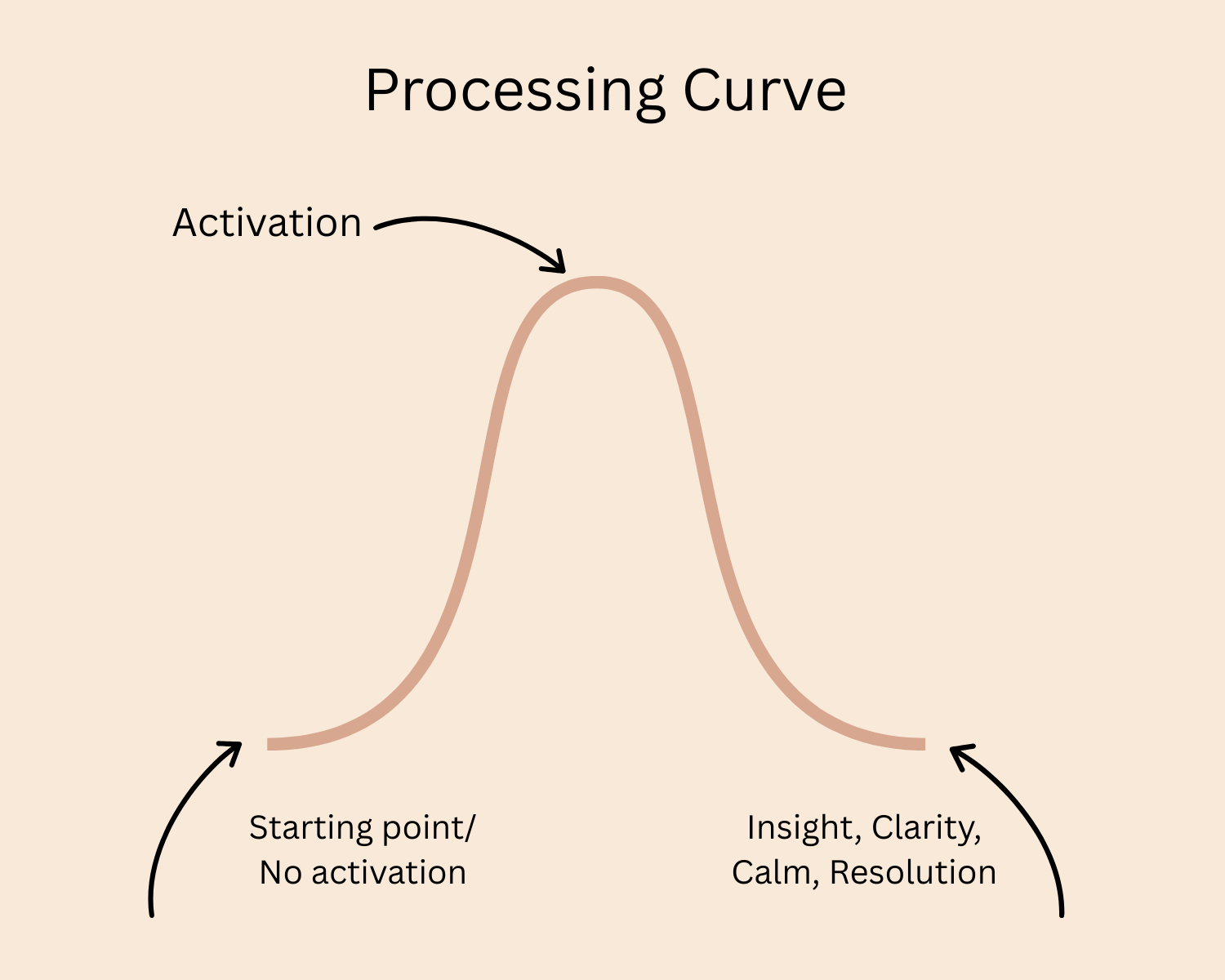
I’ll have you notice any emotion you may be feeling (getting “activated”). Then, I’ll ask you on a scale of 0 to 10, 0 being no activation and 10 being highly activated, how you’re feeling and where in your body you feel it. This helps you get connected emotionally to the topic you would like to process, which will help us find your Brainspot.

Brainspot
Once we identify how you’re feeling in the present moment as you think about and connect with the topic you would like to process, we will find your Brainspot. A brainspot is your eye position associated with feelings or memories. This is your entry way to processing. There are many different ways to find a brainspot. So, depending on what you would like to process, there are different types of Brainspotting that may be beneficial for you and we will find what is best suited for you.
Just as our eyes scan our external environment for information, our eye positioning can also be used to scan our internal environment within our brains for information. Brainspotting therapists help clients find a “spot” in their external environment that feels connected to deeply rooted information to be processed. Focusing on a particular spot in our environment helps our brains focus on a corresponding spot internally where trauma, stress, anxiety, fear, etc. is stored. This gives way to deeper processing, which allows the release of trauma and heavy emotions ultimately leading to relief.
Processing
You’ll spend most of the session processing. Processing occurs in waves. You start off not feeling very activated until we find a Brainspot which will take you to the peak of a wave. Things will feel more intense and a majority of the processing occurs here. Once you work through an issue, you’ll feel yourself come down off the wave with insights, understanding, calm, and like a weight has been lifted off your shoulders.
Processing looks and feels different for everyone. Externally, this can look like crying, needing to move your body to release emotions from it, sighing, deep breathing, rapid blinking, not blinking very much, pupil dilation or constriction, feeling tired, and more. As a Brainspotting Therapist, I have been trained to notice minimal changes in facial expressions and body language that indicates processing.
Internally, it also is different for everyone. It can feel like working through different thoughts, replaying memories, noticing themes and patterns, feeling different emotions and sensations in your body. This helps to release these emotions and from your body so you no longer hold onto them and are less impacted by the issue.
I’ll maintain attunement with you by paying attention to your processing and experiencing it from an external perspective. You will feel my support despite not talking and I will check in with you periodically to see how you’re doing. You’re always welcome to ask questions or for support. I’ll be right there with you the entire time.

Talk Therapy
Clients find it helpful to verbally process throughout the Intensive. We take breaks from Brainspotting to engage in talk therapy to process the experience and help deepen Brainspotting as well. Additionally, I always save some time at the end of the session as well to check-in, discuss what the intensive experience was like for you, as well as answer any questions you have.

After the Intensive
Post-Intensive Session
The Post-Intensive session is typically scheduled for about 3-4 weeks after the Intensive session. I like to schedule them this way because it allows us time to continue processing after the Intensive. Post Brainspotting, our brains continue to process even up to a week after a session! Also, this time in between gives you time to return to your normal routine so you can take note of any changes you experience as a result of Brainspotting.
In this session, you will complete the screening assessments that measure symptoms for the second time. Then, we will compare their results from the Pre-Intensive to the Post-Intensive. All of the clients I have worked with have noticed a reduction of their symptoms. We will discuss the results and talk about how the past few weeks have felt compared to how you felt before the Intensive.

Clients report…
Feeling lighter
More at ease
A weight lifted off their shoulders
More energy
Better focus
Calmer bodies
Quieter minds
Certain issues that no longer return even months later
Aligned thoughts and feelings
Improved sleep
Acceptance

Optional Post Intensive Sessions
Some clients feel that the Brainspotting Intensive was helpful for clearing up major traumas, phobias/fears, persistent negative thoughts, or other things that they felt were holding them back, but there were still other issues that they wanted to work through. If that is the case, we follow up with talk therapy for as long as needed. Or, they follow up with their regular talk therapist as Brainspotting Intensives can be done as an adjunct service.
Other clients choose to follow up with one or more Intensive sessions. Typically these follow up sessions are shorter at 2 or 3 hours depending on the issues that the client is working through. I have had clients complete an Intensive then do shorter Intensive sessions as needed once or twice a month.
I have also had clients who have felt significant relief and release after a Brainspotting Intensive that they take a break from therapy or are good to end at that time. There are many people who just need a one time Intensive session for one time incidents or traumas, which can include car accidents, assaults (physical or sexual), natural disasters, or witnessing a crime.
No matter what your need is, we can tailor an Intensive to you for significant, long-lasting results that change your life!

More Information
Brainspotting Intensives are a powerful tool that can work great for most people. I work with my clients to help them achieve the results they’re looking for with a customized treatment plan to fit their needs.
If you have more questions about Brainspotting or if you are interested in booking a session, please get in touch! I offer free consultation calls to determine how an Intensive can help you and if you’d be a good fit.
Wishing you ease in your healing journey

Want to learn more about Brainspotting Intensives?
Interested in working together?

Natasha Deen specializes in working with adult children of immigrants struggling with anxiety, second-guessing themselves, and always trying to keep others happy to stop neglecting their own needs and experience a better relationship with themselves and their family. She is also a Brainspotting and Islamic-Based therapy practitioner providing trauma-informed and culturally-informed care.